
You understand what is humorous? We’ve been speaking to each other about integration the incorrect way for many years. Everyone’s passionate about office work, language assessments, and job certificate.But here’s something nobody wants to admit – those things don’t actually help people anywhere.
I’ve watched this happen. Someone moves to a new place with incredible skills. Maybe they’re musicians. Maybe they paint. Maybe they’ve spent years mastering a craft. And what happens? The system tells them their experience doesn’t count because it’s not on the right piece of paper.
That’s where increased and similar movements are changing everything. They’re saying “forget the bureaucracy for a minute – show us what you can do.”
Why This Actually Works
Think approximately the remaining time you related with a person over track or artwork. You didn’t want to speak the same language perfectly, right? You simply… We were given it. That’s the whole factor.
I recall studying approximately a Syrian ceramicist who couldn’t locate work in Germany.Her engineering degree? Useless there. Her German? Still basic. But when she started showing her pottery at local markets, everything shifted. People didn’t care about her accent. They cared about the beautiful bowls she was making.That’s what creative industries do. They let your work speak louder than your paperwork.
The Money Side Nobody Talks About
Here’s what gets me excited – the creative economyis massive. We’re talking billions of dollars flowing through art, design, music, crafts, and digital content. And it’s growing faster than most traditional sectors.
Check out what UNESCO publishes about cultural and creative industries – the numbers are wild. More importantly, this sector doesn’t care where you’re from. Can you design something people want? Can you make music people enjoy? That’s all that matters.
I’ve seen people build entire businesses around their cultural backgrounds. A chef fusion restaurant. Textile designers blend traditional patterns with modern fashion. Musicians mixing instruments from their homeland with contemporary beats. The market loves this stuff because it’s authentic and fresh.
Breaking Through Walls That Shouldn’t Exist
Look, traditional integration programs mean well. Language classes are important. Job training helps. But they’re missing something huge – people need to feel valued for who they already are, not just who they might become.
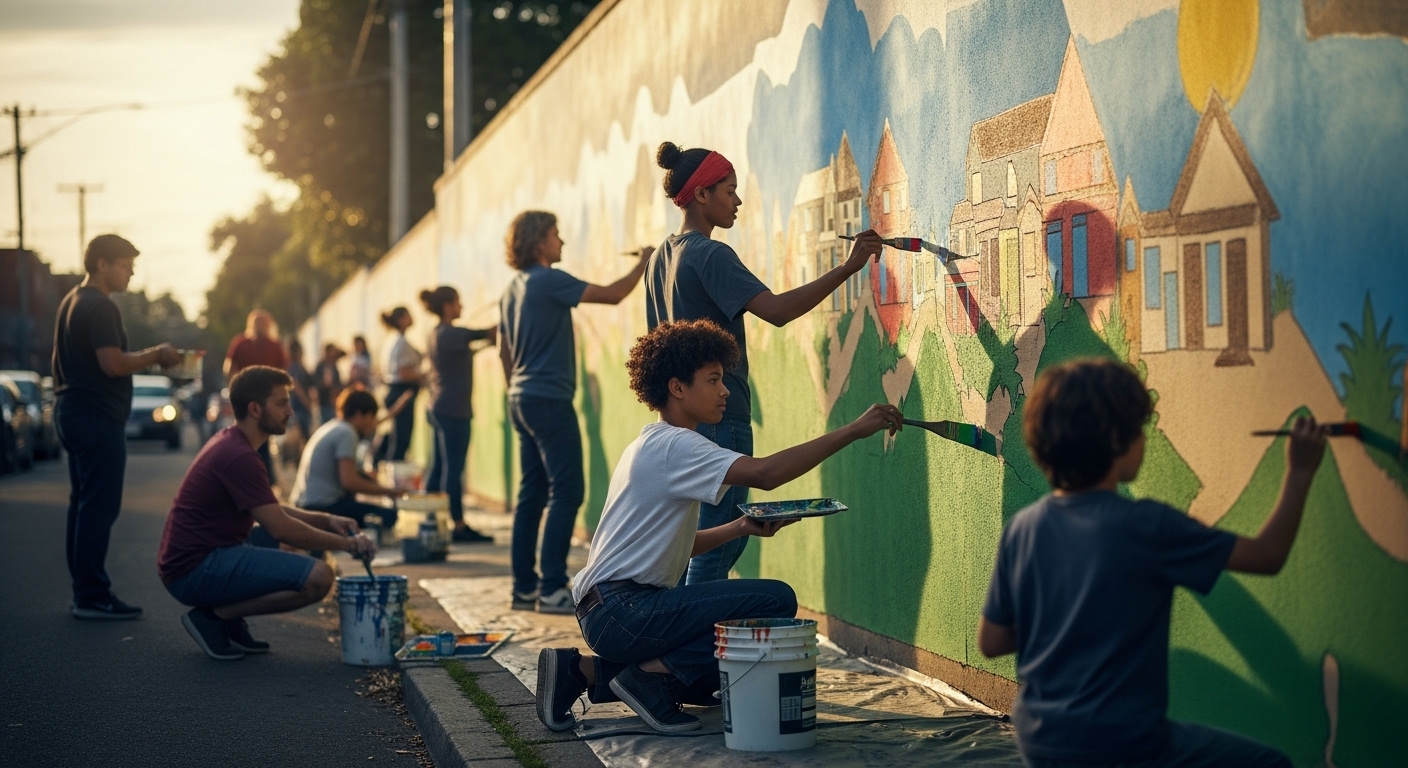
When someone joins a community art space or music collective, something different happens. They’re not “the immigrants in the language class.” They’re “the person who does that amazing thing with watercolors” or “the drummer who taught us that incredible rhythm.”
I talked to someone who runs a maker space in Berlin. She told me half her members are from other countries. They come in nervous at first. Within weeks, they’re leading workshops and collaborating on projects. Why? Because nobody cares about their visa status when they’re helping solve a design problem.
What Actually Makes These Programs Work
Here’s what I’ve noticed separates successful initiatives from feel-good projects that go nowhere:
Real resources matter. You can’t tell someone to pursue their art and then not give them access to tools. Good programs provide studio space, equipment, materials. Not fancy stuff necessarily – just what people actually need to work.
Connections beat everything. The most valuable thing isn’t skills training. It’s introducing people to others in their field. One connection to a gallery owner or an established designer can change everything. That’s what the European network ENTER figured out years ago – relationships unlock opportunities that applications never will.
Market access is non-negotiable. Creating art in a vacuum helps nobody. Programs need relationships with venues, online platforms, retailers, and customers. Without distribution channels, even talented people stay stuck.
The Stuff That Gets In The Way
I’m not going to pretend this is easy. Money’s always tight. Governments prefer funding things they can measure with simple metrics. “How many people got jobs?” is easier to track than “How much did community cohesion improve?”
Then there’s the skeptics. Some locals think cultural programs are a waste of money. Some newcomers think creative pursuits won’t pay bills. Both groups have a point – except they’re wrong. The data from places like Creative Europe shows creative industries generate serious economic value while building social capital.
Red tape drives me crazy. Rules designed for traditional services don’t fit creative work. Try explaining a collaborative art project to someone who only understands 9-to-5 job placements. It’s exhausting.
How Do You Even Measure This?
That’s the million dollar question, isn’t it? Employment rates don’t capture whether someone feels they belong. Language test scores don’t measure friendships formed.
Smart programs track different things. Sure, they count participants and income generated. But they also ask deeper questions. Do people feel connected to their community? Have they formed relationships with locals? Do they maintain their cultural identity while building new connections?
The research from Migration Policy Institute suggests these soft metrics actually predict long-term success better than traditional measures. Someone might not have a full-time job yet but if they’re deeply embedded in community networks, they’re going to be fine.
What This Means For Everyone
Here’s what people miss – this isn’t charity. When you bring diverse creative perspectives into a community, everyone benefits.
Local artists get exposed to new techniques and traditions. Galleries and venues become more interesting. Cultural institutions stay relevant by reflecting actual network demographics. Innovation will increase because numerous teams continuously outperform homogeneous ones.
Kids growing up in these blended creative areas? They expand a completely distinctive worldview. They see diversity as regular and thrilling rather than frightening or abnormal. That’s the real lengthy-term win.
Where This Goes Next
Climate exchange will displace millions within the coming many years. Political instability isn’t always going everywhere. Economic inequality continues driving migration. We can both preserve the usage of the equal worn-out techniques that slightly paintings, or we are able to attempt something unique.
The increased version proves that one-of-a-kind can work better. Instead of asking how we fit rectangular pegs into spherical holes, we are asking how we construct areas that celebrate one of a kind shapes.
Technology makes this less complicated now.
Someone can collaborate with artists across continents. They can sell to global markets from their home studio. Digital platforms amplify voices that traditional gatekeepers ignored. Organizations like Creative Hubs Network are mapping these opportunities worldwide.
Real Talk About Making This Happen
This needs everyone involved. Governments ought to write regulations that assist innovative integration, no longer just tolerate it. Businesses want to recognize that numerous innovative groups force innovation and earnings. Arts companies have to open doorways in place of guarding them.
Most importantly, we need to forestall speaking about migrants as issues wanting solutions. They’re human beings with capabilities, reports, and views which could enhance groups. The faster we internalize that, the faster we’re going to construct systems that sincerely paint.
The Bottom Line
Integration through creative industries isn’t some idealistic fantasy. It’s practical, it generates economic value, and it builds stronger communities. The increased approach demonstrates what happens when we value what people bring instead of only seeing what they lack.
We’ve spent too long pretending everyone needs to follow the exact same path to belong. Artists already knew this was nonsense. Musicians figured it out ages ago. Designers never cared about the rules in the first place.
Maybe it’s time the rest of us caught up.
When someone creates something beautiful or useful or moving, that’s a contribution. That’s the value. That’s belonging. Everything else is just paperwork.